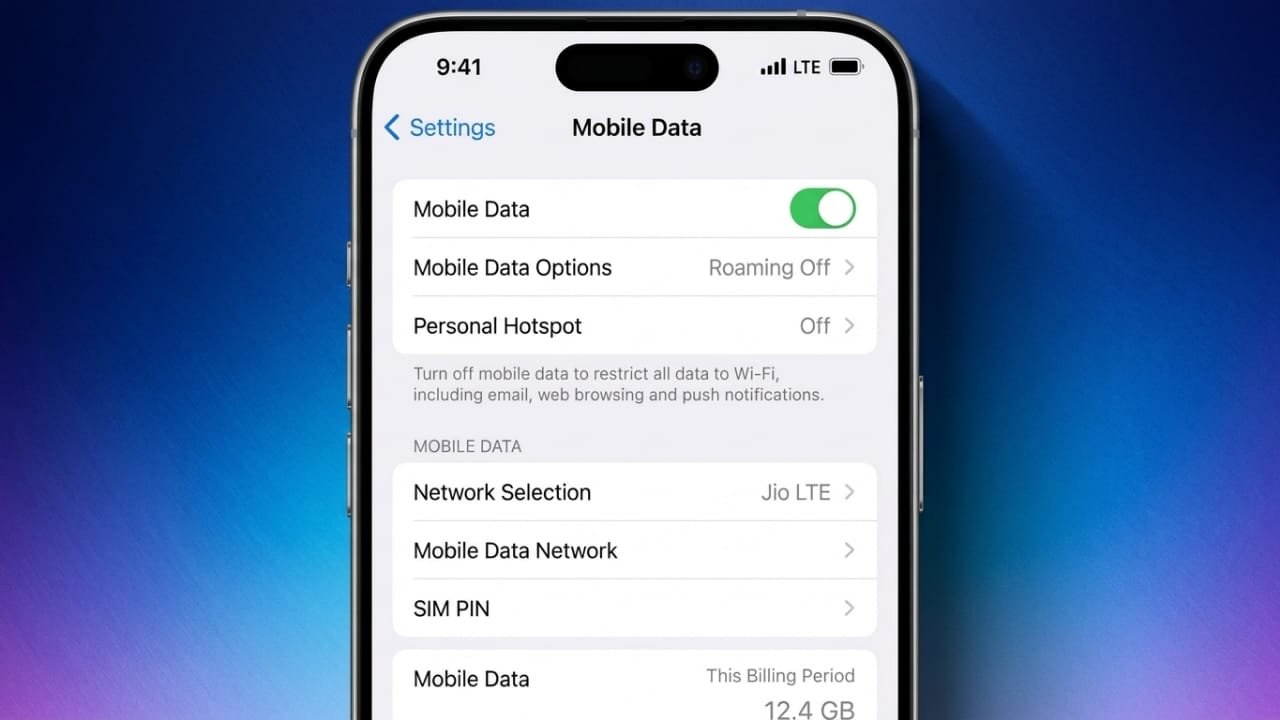
LTE (Long Term Evolution) is one of the most important technologies behind modern mobile internet. It allows smartphones, tablets, routers, and many smart devices to connect to the internet quickly and reliably through cellular networks. Even with the growing use of 5G, LTE continues to play a major role because of its wide coverage, stable performance, and large number of supported devices.
In this guide, you’ll learn how LTE works, how its network is built, where it is used, and why it continues to be valuable today.
Also read: Reset Your Microsoft Account Password: A Simple Recovery Guide
What Is LTE?
LTE stands for Long Term Evolution, a wireless communication standard created by the 3rd Generation Partnership Project (3GPP). It was introduced to improve the speed and efficiency of older 3G mobile networks.
Although many people refer to LTE as 4G LTE, it is better understood as the technology that made modern 4G mobile broadband possible. Since its launch around 2008, LTE has provided faster internet speeds, lower latency, and better network performance for millions of users worldwide.
How LTE Networks Operate
LTE works by connecting your device to the nearest cellular tower. Once connected, data travels through a modern packet-based network before reaching websites, apps, or online services.
The process is simple:
- Your device connects to a nearby LTE cell tower.
- The network verifies your SIM card and device.
- Data is sent through the LTE core network.
- The requested information is delivered from the internet.
- The response returns to your device in a fraction of a second.
Because LTE uses Internet Protocol (IP) for communication, data transfers are faster and more efficient than traditional circuit-switched systems.
Technologies That Improve LTE Performance
Several advanced technologies work together to deliver smooth mobile connectivity.
OFDM (Orthogonal Frequency Division Multiplexing)
OFDM divides radio signals into multiple smaller channels. This improves data transmission efficiency and reduces interference.
MIMO (Multiple Input Multiple Output)
MIMO uses multiple antennas to send and receive data at the same time. This increases speed and strengthens signal quality.
Adaptive Modulation
LTE automatically adjusts signal transmission based on network conditions. Devices with strong signals receive higher speeds, while weaker signals maintain stable connections.
Together, these technologies improve speed, reliability, and overall network performance.
Main Parts of an LTE Network
An LTE network includes several key components that work together.
- E-UTRAN: Provides wireless access between devices and the network.
- eNodeB: Acts as the LTE base station that connects users to the network.
- Evolved Packet Core (EPC): Manages data routing and internet connectivity.
- LTE Antennas: Send and receive wireless radio signals.
This architecture allows LTE networks to support millions of users efficiently while remaining scalable for businesses and industries.
Devices That Use LTE
LTE supports many different types of devices, including:
- Smartphones
- Tablets
- Mobile hotspots
- LTE routers
- Industrial gateways
- Smart IoT devices
Different LTE categories are designed for different needs.
- LTE Cat 1: Suitable for many Internet of Things (IoT) applications.
- LTE Cat 4: Offers higher speeds for routers and gateways.
- LTE-M: Designed for low-power devices that require mobility.
- NB-IoT: Built for sensors and devices that send small amounts of data over long distances.
Typical LTE Speed
Actual LTE performance depends on factors such as signal strength, network traffic, available spectrum, and device capability.
Average performance usually falls within these ranges:
- Download Speed: 5 Mbps to over 100 Mbps
- Upload Speed: 2 Mbps to around 50 Mbps
- Latency: Approximately 20–50 milliseconds
Actual results may vary depending on your network provider and location.
LTE Advanced and LTE Advanced Pro
As LTE technology improved, newer versions delivered even better performance.
LTE Advanced
Introduced around 2011, LTE Advanced increased speed by combining multiple frequency bands through carrier aggregation.
LTE Advanced Pro
Released later, LTE Advanced Pro added improvements such as:
- Better carrier aggregation
- Higher-order modulation
- Improved MIMO technology
- Greater network capacity
- More stable connections
In ideal conditions, Gigabit LTE can reach theoretical speeds above 1 Gbps, although real-world speeds are usually lower.
LTE for IoT Applications
LTE has become an important communication technology for Internet of Things (IoT) devices.
Businesses use LTE to monitor equipment remotely, collect real-time data, and manage connected systems without relying on fixed internet connections.
Common applications include:
Smart Cities
- Intelligent traffic management
- Smart street lighting
- Connected EV charging stations
Transportation
- Fleet tracking
- Vehicle monitoring
- Passenger Wi-Fi systems
Manufacturing
- Equipment monitoring
- Factory automation
- Predictive maintenance
Agriculture
- Remote irrigation management
- Water monitoring
- Farm equipment tracking
Retail
- Connected POS terminals
- Digital signage
- Self-service checkout systems
- ATM connectivity
Because LTE offers reliable coverage and stable connectivity, it remains a popular choice across many industries.
LTE Security Features
LTE includes several built-in security measures that help protect users and businesses.
Key security features include:
- SIM-based user authentication
- Encrypted wireless communication
- Secure IP tunneling
- Network access control
These protections help reduce unauthorized access and secure data while it travels across the network.
LTE and 5G Working Together
Although 5G continues to expand, LTE remains an essential part of modern mobile networks.
Many current 5G deployments use existing LTE infrastructure, especially in non-standalone (NSA) networks. If a 5G signal becomes unavailable, devices can automatically switch back to LTE to maintain connectivity.
LTE also offers several advantages:
- Wide geographic coverage
- Large device ecosystem
- Lower deployment costs
- Proven reliability
- Long-term support for industrial equipment
For these reasons, LTE and 5G are expected to operate together for many years.
Evolution of Mobile Networks
Mobile communication has improved with each new generation.
- 3G: Introduced mobile internet with moderate data speeds.
- LTE / 4G: Delivered faster browsing, streaming, and lower latency.
- 5G: Offers higher speeds, lower latency, and support for massive connected devices.
Instead of replacing LTE overnight, 5G builds upon existing LTE infrastructure, making both technologies important for current and future connectivity.
Also read: Google Pixel Watch 5 Launches in India With Smarter Health and Performance Upgrades
Final Thoughts
LTE has transformed the way people access mobile internet. Its combination of fast speeds, dependable coverage, efficient network design, and strong device support makes it one of the most widely used wireless technologies today.
From smartphones and business applications to industrial automation and IoT systems, LTE continues to provide reliable connectivity around the world. As 5G expands, LTE will remain a valuable part of mobile communication by offering broad coverage, dependable fallback connectivity, and long-term support for millions of devices.

Jatin Rajput (Tech Golu) — Tech blogger & YouTuber with 6+ years of experience in WhatsApp, Instagram, Facebook, and mobile guides. Founder of TechGolu.in.