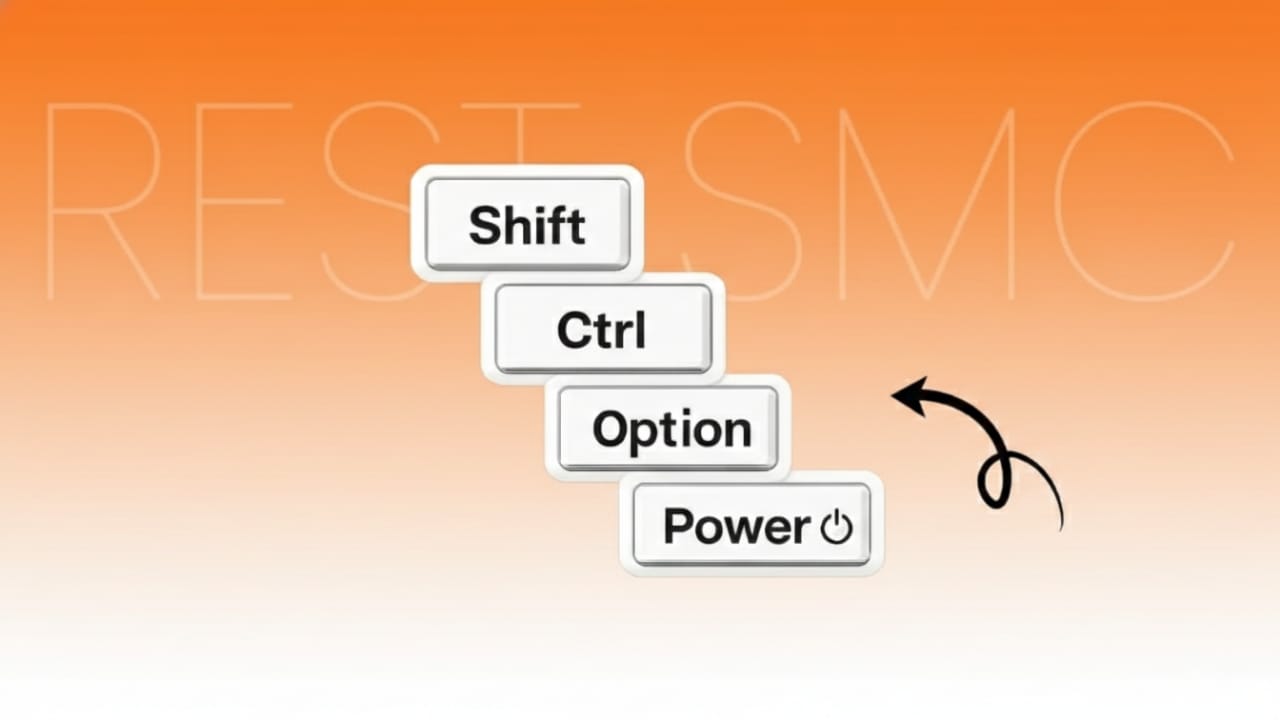
Sometimes a Mac starts acting oddly. The battery may not charge as expected, fans might run too loud, or the system may not sleep properly. A normal restart does not always solve these problems. In certain hardware-related cases, Apple recommends resetting the SMC.
The good news is that this process is safe, quick, and does not affect your personal data.
Also read: iPhone Not Appearing in Finder? Simple Fixes That Actually Work
What Is the SMC and Why It Matters
SMC stands for System Management Controller. This is a special chip found only on Intel-based Macs. It quietly manages many basic hardware tasks in the background. You usually never notice it—until something goes wrong.
Hardware Functions Controlled by the SMC
The SMC is responsible for:
- Power on and shutdown behavior
- Battery charging and battery status
- Fan speed and thermal control
- Keyboard backlight
- Screen brightness
- Sleep and wake actions
- Indicator lights
- Response when opening or closing the lid
When the SMC stops working properly, your Mac may show strange or inconsistent behavior. Resetting it restores default hardware settings. It does not delete files, apps, or personal data.
Common Signs That an SMC Reset May Help
SMC issues usually look like hardware problems, not software bugs. You may want to try an SMC reset if you notice things like:
- The Mac will not power on or shuts down randomly
- The battery does not charge or shows incorrect percentages
- Fans run at full speed for no clear reason
- Fans stop spinning entirely
- Keyboard backlight stops working
- Display brightness behaves oddly
- The Mac feels slow even with low usage
- Sleep or wake fails repeatedly
- Camera or ports stop responding correctly
Before resetting the SMC, always try a normal restart first.
Identify Your Mac Type Before You Begin
The reset steps depend on whether your Mac uses Apple Silicon or Intel, and whether it has a T2 Security Chip.
How to Check Your Mac Model
- Click the Apple logo in the top-left corner
- Choose About This Mac
- Select More Info
- Open System Report
- Look for Controller or Security Chip in the sidebar
Once you know your Mac type, follow the matching steps below.
Apple Silicon Macs (M1, M2, M3)
Apple Silicon Macs do not have a separate SMC. These functions are built directly into the chip.
What to Do Instead
- Shut down your Mac completely
- Wait about 30 seconds
- Press the power button to start it again
This simple restart refreshes hardware control automatically. No key combinations are needed. If problems continue, the issue may require professional service.
Apple Silicon models include:
- MacBook Air (M1 or newer)
- MacBook Pro (M1 or newer)
- iMac (2021 or newer)
- Mac mini (2020 or newer)
- Mac Studio (2022 or newer)
- Mac Pro (2023)
Intel MacBooks With T2 Security Chip
Most MacBooks released after 2018 include the T2 chip.
Option 1: Quick Reset (Try First)
- Shut down your Mac
- Hold the power button for 10 seconds
- Release it and wait a moment
- Turn the Mac on normally
If the issue remains, continue with the full reset.
Option 2: Full SMC Reset
- Shut down the Mac
- Press and hold:
- Left Control
- Left Option
- Right Shift
- Hold these keys for 7 seconds
- While holding them, press and hold the power button
- Keep all keys pressed for another 7 seconds
- Release everything at once
- Wait a few seconds, then turn the Mac on
The Mac may briefly turn on and off. This is normal. The first startup can take slightly longer.
Intel Desktop Macs With T2 Chip
For iMac, Mac mini, and Mac Pro models with T2:
- Shut down the Mac
- Unplug the power cable
- Wait 15 seconds
- Plug the cable back in
- Wait another 5–10 seconds
- Press the power button
Older Intel MacBooks Without T2 Chip
MacBooks With Non-Removable Battery (Mostly pre-2018)
- Shut down the Mac
- Press and hold:
- Left Shift
- Left Control
- Left Option
- Power button
- Hold all keys for 10 seconds
- Release everything
- Turn the Mac on
MacBooks With Removable Battery (Very old models)
- Shut down the Mac
- Remove the battery
- Hold the power button for 15 seconds
- Reinsert the battery
- Turn the Mac on
Older Intel Desktop Macs Without T2 Chip
Steps are the same as newer desktops:
- Shut down the Mac
- Unplug the power cable
- Wait 15 seconds
- Plug it back in
- Wait 5 seconds
- Power on
PRAM and NVRAM: What They Do
PRAM and NVRAM store small system settings such as:
- Screen resolution
- Speaker volume
- Startup disk selection
- Time zone and clock settings
- Mouse and keyboard preferences
Older Intel Macs use PRAM, while newer Intel Macs use NVRAM. Both work in a similar way. Apple Silicon Macs use neither.
When to Reset PRAM or NVRAM
Only reset it if needed. It may help if:
- Volume or sound behaves oddly
- Keyboard or mouse responds incorrectly
- Date and time keep resetting
- Screen resolution changes on its own
It is also useful before selling or giving away a Mac.
How to Reset PRAM / NVRAM (Intel Macs Only)
- Shut down the Mac
- Turn it on and immediately press:
- Option + Command + P + R
- Hold the keys for about 20 seconds
- Release them after the Mac restarts
You may hear the startup sound more than once or see the Apple logo again. After booting, re-adjust your settings if needed.
Is Resetting the SMC Safe?
Yes. An SMC reset does not erase files, apps, or personal data. It only restores hardware-related settings. You can easily change power or display preferences again afterward.
When an SMC Reset Will Not Fix the Problem
An SMC reset cannot:
- Repair physical hardware damage
- Fix software bugs or broken apps
- Solve serious firmware issues
If problems continue, consider reinstalling macOS or contacting Apple Support.
Also read: How to Install Clawdbot (MoltBot) on Windows – Simple Step-by-Step Guide
Final Thoughts
Resetting the SMC can solve many common hardware issues related to power, battery, fans, and sleep. The steps depend on your Mac model. Apple Silicon Macs handle this automatically, while Intel Macs may need manual resets.
Always start with simple fixes, and use resets only when necessary. For ongoing or serious problems, professional support is the best option.

Jatin Rajput (Tech Golu) — Tech blogger & YouTuber with 6+ years of experience in WhatsApp, Instagram, Facebook, and mobile guides. Founder of TechGolu.in.